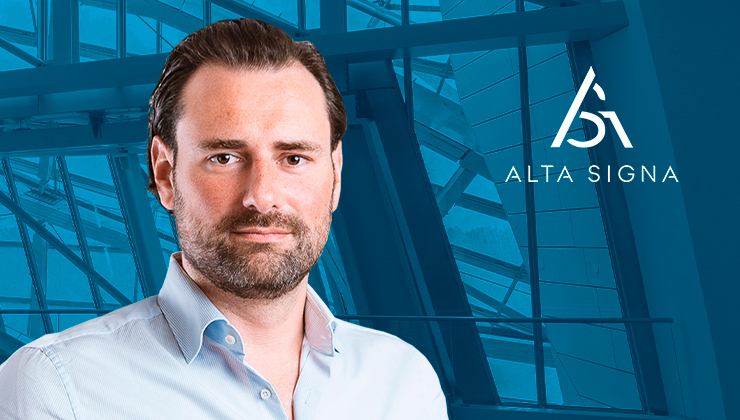
Welcome to the latest edition of Alta Signa’s Spotlight series. Today we speak with Maximilian Moll, Branch Manager for the DACH region, about the continued growth of the division across Germany, Austria and Switzerland. Maximilian shares his priorities for the year ahead, the evolving outlook for Financial Lines, and how Alta Signa is strengthening its presence in this important European market.
Over the past year, Alta Signa has continued to build its presence across the DACH region. How have you seen the business develop, and what have been some standout moments for you as Branch Manager so far?
We’ve seen strong development across two main areas: expanding our presence in Germany and Austria, and building momentum after launching our Swiss operations. On both fronts, we’ve had great success given our capacity and resources. In Switzerland, for example, we’ve doubled our portfolio, while on the cyber side, we’ve also seen our business double. D&O has remained very stable and consistent. Even in a soft market, we’ve managed to retain almost all accounts and premiums while still growing the portfolio.
Financial Institutions (FI) has seen double-digit growth, and we believe there’s more potential there. The market opportunities aren’t huge, so we need to be creative, especially looking at primary business across all markets.
A key focus has been leveraging our decentralised region by strengthening broker relationships. This has been time-consuming but rewarding. We've held over 220 external meetings, run 12 roadshows, participated in hundreds of virtual calls, and attended numerous events. We aim to be very present. The results speak for themselves: submissions increased by 50%, and we’ve maintained high underwriting quality despite a soft market.
Looking ahead, what are your key goals for the DACH division this year, both in terms of team growth and market expansion?
At the start of the year, the senior team met in Marbella for a strategy offsite to align on focus areas. We plan to continue growing on the cyber side while preparing our primary offering, as well as expanding in FI and D&O. In Switzerland, we’ll focus on maintaining momentum and hiring an underwriter locally.
In Germany, we plan to open a second branch with a focus on cyber and marine. We also want to channel our resources more professionally to maximize distribution efficiency.
From your perspective, what are the main trends shaping the Financial Lines market in DACH right now, particularly across areas such as D&O, Professional Indemnity, and Financial Institutions?
On D&O, we believe we’ve reached the bottom of the market, especially considering the current macro and political environment. Active claims on major risks are coming in, particularly in Germany, which is going through a significant transition phase. We don’t expect the market to remain as soft going forward. The key is to maintain high underwriting quality while staying ambitious and strengthening our market position.In cyber, the soft market may end in the next 12–18 months.
With new product lines, we’ve been focusing on specialization and developing new distribution relationships. For Switzerland, our priority is to keep momentum high and expand our on-the-ground presence.
As competition and client expectations continue to evolve, how is Alta Signa balancing sustainable growth with technical underwriting discipline in the region?
We have to work twice as hard to achieve the same results as a few years ago. To manage this, we’re simplifying processes and using AI to maintain efficiency. We’re not the cheapest option, but brokers value our expertise, which allows us to maintain high-quality underwriting. We focus on complex risks and aim to build long-term, consistent relationships with our clients.
Finally, what excites you most about the opportunities ahead for Financial Lines in DACH, and what challenges do you think will define the market over the next 12 to 18 months?
The major challenge is the soft market environment, which is pushing some companies to compromise on underwriting quality. For us, it’s crucial to remain disciplined, even if this comes at a cost to growth, while ensuring profitability. We focus on acknowledging external factors and adapting, rather than simply reacting.
I’m also excited about people development. We have a successful student framework, which helps us maintain expertise while preserving a personable culture. Ensuring our teams remain knowledgeable and engaged will be key to our success in the next 12–18 months.