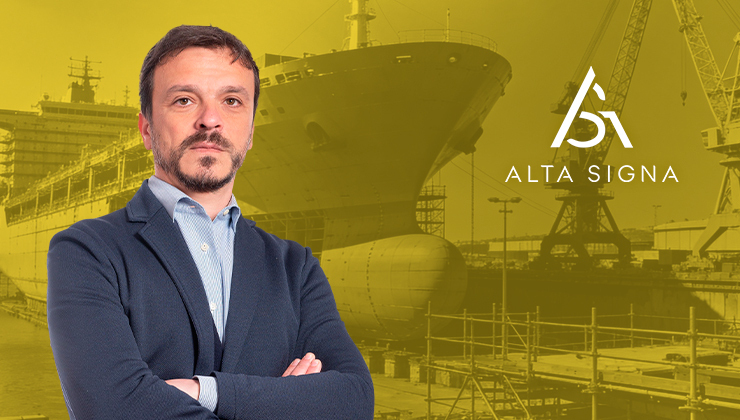
By Francesco Dubbioso, European Head of Underwriting – Marine, and Branch Manager – Italy, Alta Signa
Shipbuilding insurance is entering a phase where disciplined underwriting is more critical than ever. Unlike standard marine or construction risks, shipbuilding is not static. From the first steel cutting through launch, harbour and sea trials, and ultimately delivery, both the nature of the risk and the declared values are constantly evolving. In a market shaped by increasing build complexity, capacity constraints, and new technologies, underwriting decisions must be grounded in a clear, real-time understanding of how risk develops across the project lifecycle.
Distinct Risk Profiles: Accumulation Risk
Each stage of construction presents its own distinct risk profile and corresponding sum insured. When multiple vessels are under construction within the same shipyard, overall exposure can escalate rapidly, making accumulation risk a central concern rather than a secondary consideration. Precisely mapping the build phases and understanding yard-wide exposure is therefore essential, not only for setting appropriate premiums, but for managing potential clash scenarios and ensuring underwriting assumptions reflect reality.
Effectively managing shipbuilding risk requires more than technical expertise alone. While an understanding of classification requirements, material choices, and propulsion systems is important, sound judgement remains the most critical skill. Underwriters and brokers must be able to assess a shipyard’s performance on comparable projects and evaluate how it operates in practice, not just how it presents on paper.
Specialist surveyors play a vital role in this process. Operating under recognised shipyard risk programmes, they provide a level of technical insight and on-the-ground assessment that strengthens underwriting decisions. Their involvement adds depth to the analysis and supports risk selection in a way that even the most experienced marine underwriter cannot achieve independently.
Sustainability Is an Evolution, Not a Disruption
Sustainability trends such as alternative fuels and greener ship designs are often viewed as disruptive forces within shipbuilding insurance. In reality, they represent the latest chapter in a long tradition of evolution. Every era of shipbuilding has introduced new materials, systems, and technologies, and builders’ risk insurance has continually adapted to accommodate them.
With experienced underwriting and targeted technical support, insurers can apply pragmatic warranties and controls that accurately reflect the underlying risk. There is no need to reinvent the product. The focus remains on understanding the technology, pricing the exposure correctly, and managing risk through informed and proportionate measures.
Capacity, Appetite, and Geographic Nuance
Capacity and insurer appetite vary significantly depending on shipyard size and location. Large shipyards typically require exceptionally high limits, making co-insurance arrangements a standard solution. Smaller and mid-sized yards, by contrast, can often be placed more easily, provided they demonstrate strong certification, a solid reputation, and appropriate facilities.
Geography also plays a defining role. Local market dynamics, regulatory environments, and historical claims experience all influence capacity, pricing, and deductible structures. A disciplined underwriting approach recognises these nuances and avoids applying uniform solutions to fundamentally different risk profiles.
Recent large claims and disputes have underlined the importance of comprehensive documentation and experienced oversight throughout the build process. Detailed records, including factory and site acceptance tests, commissioning reports, and clearly defined responsibility matrices, are essential for achieving timely and effective claims resolution.
Ultimately, disciplined underwriting rooted in real-world shipbuilding experience helps prevent misalignment between how projects actually unfold and the assumptions embedded within pricing and risk models. This alignment is critical to both loss prevention and long-term portfolio performance.
A Disciplined Approach to a Complex Risk
Shipbuilding will always be complex, but complexity does not have to mean uncertainty. With the right blend of experience, technical insight, and disciplined judgement, insurers can continue to support shipyards and owners through every stage of construction.
Further Reading: Insurance Post - Why Shipbuilding Insurance is Making Waves in Marine Risk
To find out more about Alta Signa’s approach to shipbuilding risk and how our marine underwriting expertise can support your projects, please get in touch with our team.